Doll Anatomy & Upgrades
Articulated Toes: 3 Pros, 2 Cons & TAYU’s Brilliant Fix
Ten little joints are quietly becoming the most argued-about upgrade in the doll world. Here’s the honest breakdown — what they fix, what they break, and why TAYU’s new anti-puncture skeleton tips the scale.
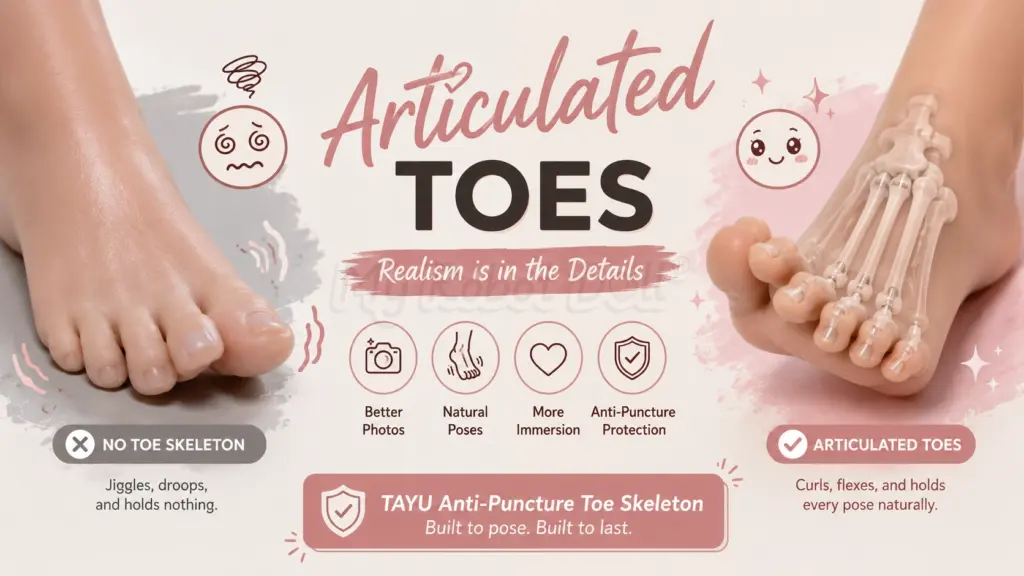
Here’s a weird truth about realism: your brain will forgive a lot. Slightly-off proportions? Fine. A seam here or there? Barely noticed. But feet with no toe skeleton inside — soft solid silicone that jiggles when you move the leg, droops when the foot leaves the ground, and holds absolutely nothing — your brain flags those instantly. Feet are where the illusion goes to die.
Which is why articulated toes have become the upgrade everyone’s asking about. In this guide we’ll cover what they actually are, the real pros and cons (including the two cons most product pages conveniently forget), and TAYU’s new articulated toe joint skeleton with anti-puncture design — the first serious attempt to fix the upgrade’s oldest flaw.
So What Are Articulated Toes, Exactly?
On a standard doll body, the skeleton stops at the ankle or foot plate. The toes themselves are just soft, solid silicone — beautifully sculpted, but boneless. They wobble when the body moves, sag under their own weight, and can’t be posed: press them into a curl and they spring right back the moment you let go.
Articulated toes swap that paddle for a chain of tiny internal joints — the skeleton literally extends into each toe. If your doll has articulated fingers (at this point, who doesn’t?), it’s the exact same idea, relocated south. Suddenly the toes can:
- Curl — gripping, flexing, digging into the mattress
- Splay — that relaxed, weight-on-the-heels stance real feet do
- Point or flex to match the pose — pointed when lying down, flexed when kneeling
- Stay put — the joints hold tension, so the pose you set is the pose you get
Curious how far any doll joint can safely bend before you’re voiding warranties? Our Doll Joint Movement and Safe Range Guide covers the whole skeleton, head to (articulated) toe.
The Pros: Why People Rave About Them
1. Poses finally look finished
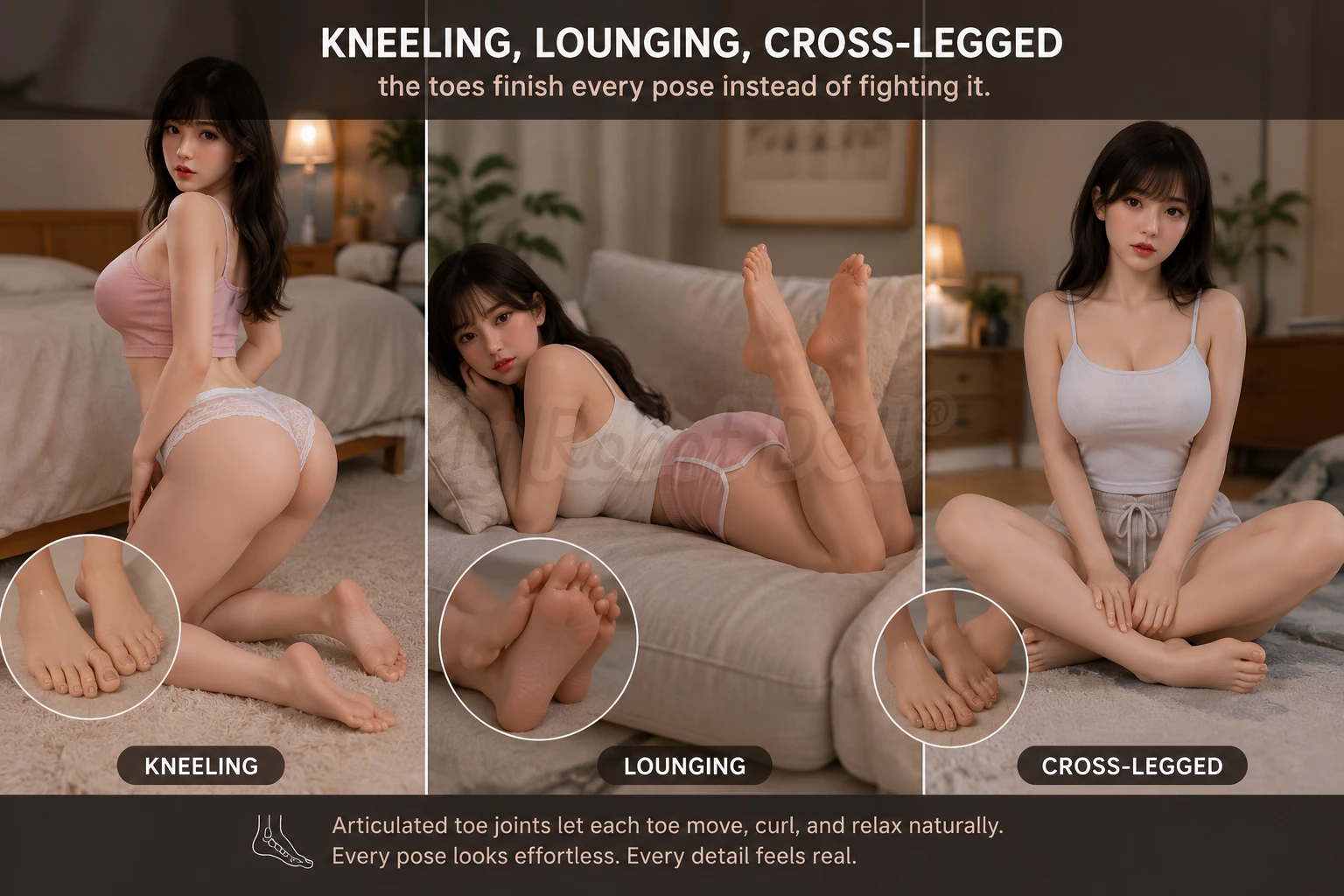
Human feet are never neutral. Kneel, and your toes press into the floor. Lie on your stomach, and they go soft. Sit cross-legged, and they follow the ankle. Rigid toes can’t do any of that — so every pose ends in two little exclamation points of plastic sticking out at the wrong angle.
Articulated toes let the foot complete the sentence. Photographers notice it first: a gently curled foot in the corner of a shot reads as alive in a way no molded foot ever will. It’s a two-inch detail that upgrades the entire silhouette.
2. No more awkward feet during use
Let’s be adults about it: during intimate use, legs and feet end up everywhere. And rigid feet have a talent for ending up in exactly the wrong place — jutting into your peripheral vision at a 90° angle, pressed flat against the headboard like a suction cup, generally ruining the moment.
With articulated toes (and a decent ankle skeleton behind them), feet settle into the position the body is in. They flex against the mattress, curl, relax. Small detail; enormous difference in immersion. Owners consistently list “awkward feet” among their top immersion-breakers — this is the fix.
3. Steadier kneeling and crouching poses
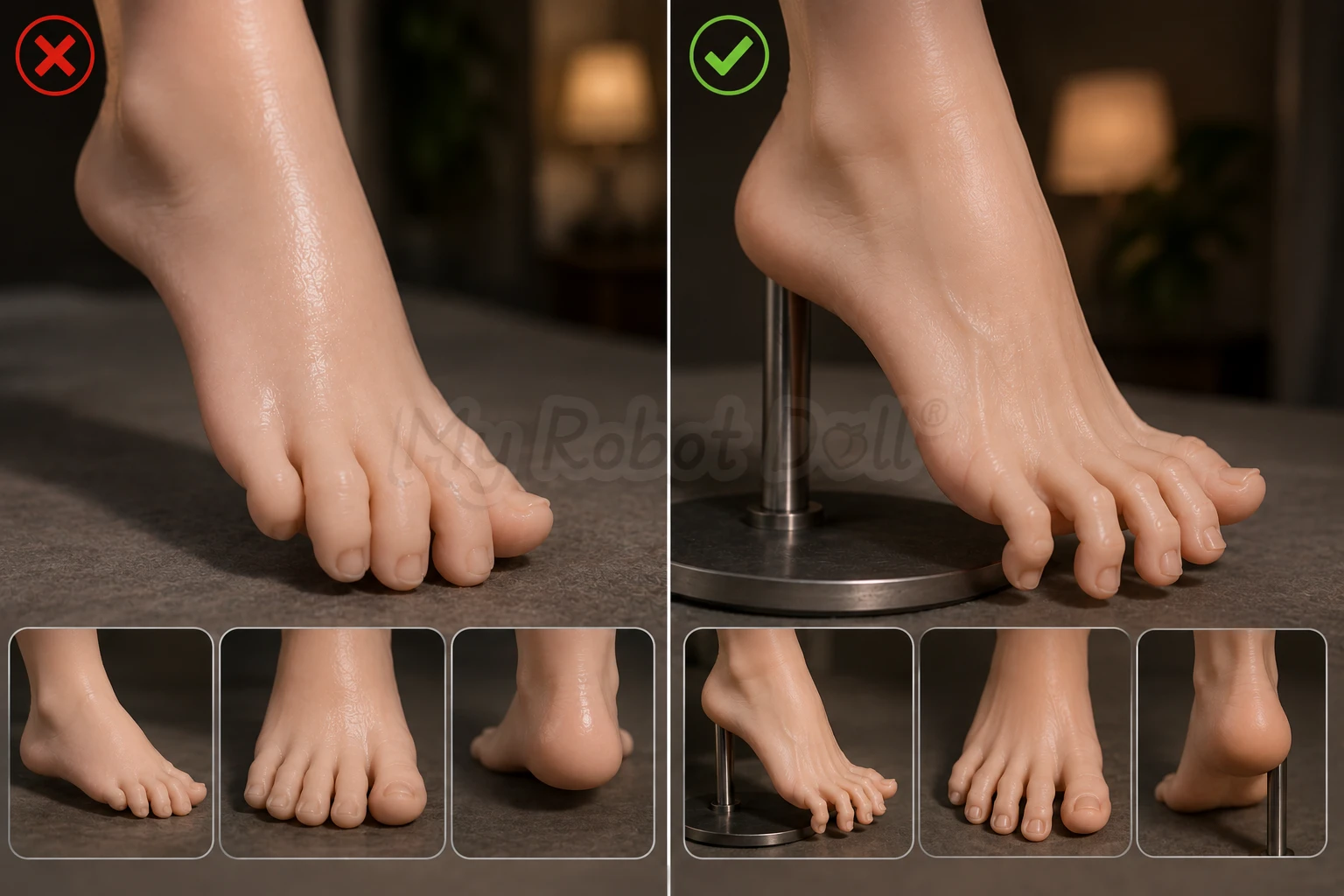
Pair articulated toes with a hard-feet option and flexed toes give the foot a wider, more natural contact patch. Kneeling poses settle onto the toes the way a real body would, instead of teetering on a rounded plastic nub.
The Cons: The Two Things Nobody Tells You
Yes, we sell these upgrades. We’d still rather you order with eyes open, because both of these are real.
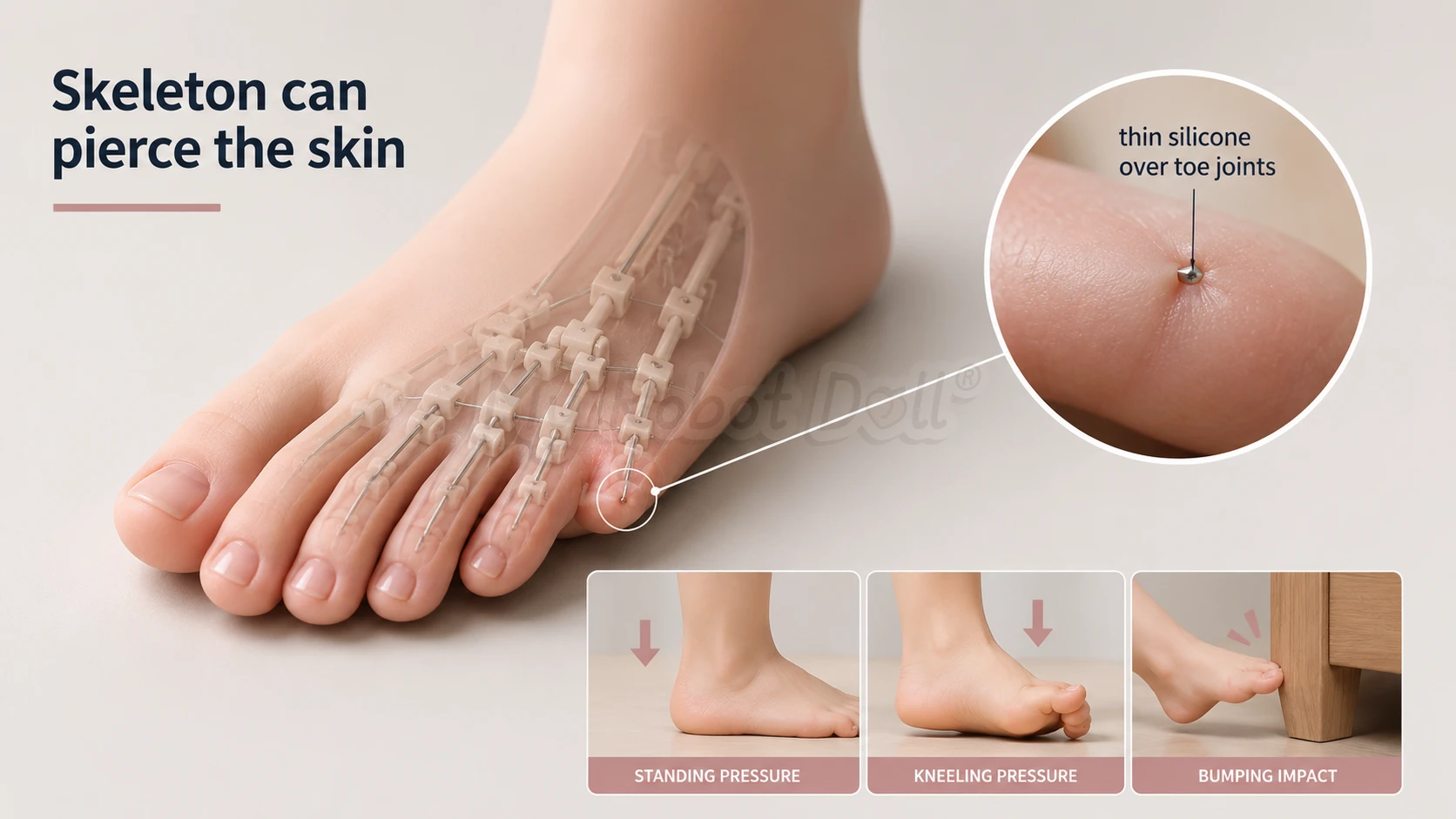
1. The skeleton can pierce the skin
This is the classic curse of articulated extremities. The joints inside each toe are tiny, and the silicone over them is thin. Flex them a lot — or push them past their natural range — and eventually a wire tip or joint edge can work its way through the skin, the same way an armature wire in any sculpted figure eventually pokes through soft material under repeated stress. Congratulations: your doll now has a skeleton reveal at the worst possible location.
Toes actually have it worse than fingers, because feet take load. They’re pressed into floors, buried in mattresses, carrying partial body weight in kneeling poses, and they’re usually the first thing to bump a doorframe when you’re carrying the doll like a heroic firefighter.
The good news: small punctures are fixable at home (our TPE & Silicone Repair Guide walks you through it). The better news: prevention is now built in — which is the whole point of TAYU’s redesign below.
2. High heels? Forget it.
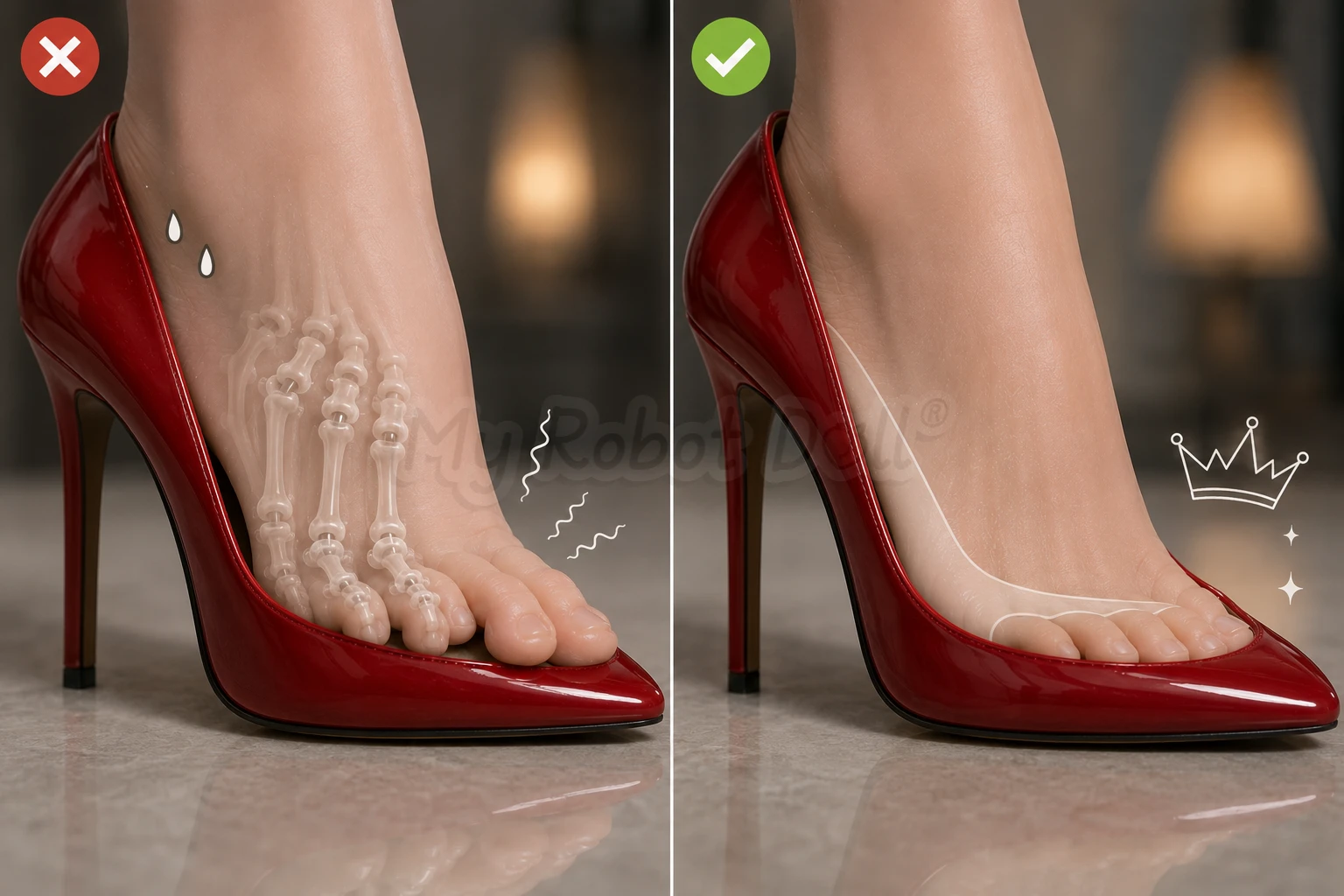
Here’s the con that surprises everyone after checkout. High heels only work because a foot can lock into a rigid, arched, pointed shape — the whole foot becomes a lever, with the toes braced hard inside the toe box.
Articulated toes refuse to play along:
- The joints compress and shift inside the shoe instead of holding the arch
- Heel pressure drives those tiny joints straight into the thin silicone at the toe tips — the exact loading that causes punctures
- The shoe never sits right, and forcing it can permanently bend the toe joints
If stilettos are a core part of your styling plans — and for plenty of owners they absolutely are — go with standard fixed feet or a hard-feet option instead, and raid our clothing & cosplay accessories for footwear that’ll actually fit.
The cheat sheet
| Feature | Standard fixed toes | Articulated toes |
|---|---|---|
| Natural posing (kneeling, sitting, lying) | Limited | Excellent |
| Foot appearance during use | Often stiff / awkward | Natural, adaptive |
| Photography realism | Average | Best in class |
| High heels | Yes | Not recommended |
| Puncture / wire-exposure risk | Very low | Present (much lower with anti-puncture designs) |
| Durability under heavy handling | High | Moderate–High (design dependent) |
Enter TAYU: Articulated Toes That Fight Back
TAYU has a habit of engineering its way out of industry-wide problems — they were early on weight reduction, early on refined foot skeletons, and now they’ve gone after the puncture problem directly.
Select TAYU bodies now offer an articulated toe joint skeleton with integrated anti-puncture design as an optional upgrade — choose it when configuring your doll.
What they actually changed
The redesigned foot structure keeps everything owners love — toes that flex, curl, and hold a pose — while the reinforced internal construction protects the joint tips, exactly where wire exposure normally starts. Think of it as the same philosophy behind the protective caps on articulated fingers, applied to the ten joints most likely to meet your floor.
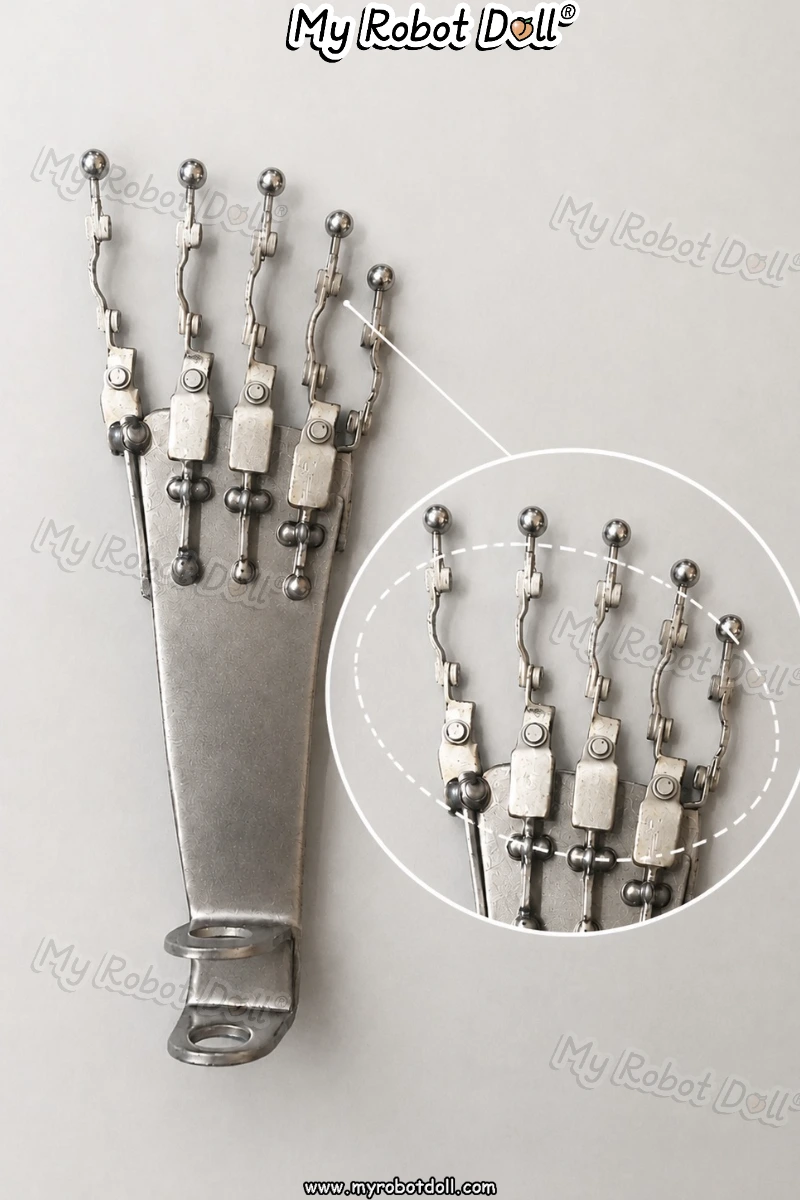
Working with TAYU’s existing foot skeleton system, the new toe joints deliver:
- A wider posing range for the whole foot
- More natural foot angles in seated, kneeling, and lying poses
- Better wear resistance over years of handling
- A more lifelike silhouette — with no durability tax
Which bodies can get it?
The anti-puncture articulated toe skeleton is currently available as an upgrade option on these TAYU Doll bodies:
- 148A
- 148D+
- 151E
- 153E Skin Texture
- 158C+
- 158D
- 161F
- 163D Skin Texture
Plus select classic bodies: 155B/I, 163D, and 170E.
Pro tip from our configurators: if you’re adding the articulated toe upgrade, pair it with the hard feet upgrade. Hard feet give the sole and heel a solid foundation, so the flexible toes do the expressive work while the rest of the foot stays rock-stable. It’s the best combination TAYU currently offers.
Browse the full TAYU lineup here, or go straight to the ultra-realistic TAYU NOVA series. Not sure which body fits your plans — or whether the upgrade is worth it for how you’ll use your doll? Ask us — we configure these daily and we’ll spec it right the first time.
The Verdict: Should Your Next Doll Have Articulated Toes?
Get them if…
- Posing, display, or photography is half the fun for you
- You’re tired of feet photobombing every intimate moment at weird angles
- You’re ordering a TAYU body that offers the anti-puncture upgrade — the durability trade-off is far smaller than with older designs
- You handle your doll with reasonable care
Skip them if…
- Heels and structured footwear are non-negotiable for your styling
- You reposition your doll roughly and often
- You want the absolute lowest-maintenance setup possible
The short version: in 2026, articulated toes have graduated from “fragile gimmick” to “worthwhile upgrade” — and reinforced designs like TAYU’s are the reason. Just respect the heel rule, move the toes within their natural range, and those ten little joints will quietly make every pose better.
Frequently Asked Questions
Do articulated toes break easily?
Older designs were prone to wire tips wearing through the silicone at the toe tips. Modern reinforced designs — like TAYU’s anti-puncture toe skeleton — substantially reduce this risk. Moving the toes gently within their natural range is still the best protection.
Can a doll with articulated toes wear high heels?
Not reliably, and we don’t recommend trying. Heels need a rigid, locked toe position; articulated joints compress under that pressure, which ruins the fit and concentrates stress exactly where punctures start. Choose fixed or hard feet if heels matter to you.
Can articulated toes hold a pose?
Yes — the joints hold tension just like finger joints. Curl, flex, or splay them and they stay put until you move them again.
Which TAYU bodies offer the anti-puncture articulated toe skeleton?
It’s available as an upgrade option on the 148A, 148D+, 151E, 153E Skin Texture, 158C+, 158D, 161F, and 163D Skin Texture bodies, plus the classic 155B/I, 163D, and 170E. Select it when configuring your doll, and pair it with the hard feet upgrade for the most stable result.
What if the skin over a toe joint does get damaged?
Small silicone punctures are usually repairable at home. Follow our repair guide and keep a kit from our repair & maintenance accessories on hand.